Central Asia — Country Profile
Uzbekistan
Population
37.5 million
GDP
$147 billion
Literacy Rate
99.9%
Life Expectancy
73.5 years
Net Migration
-1.2
Gender Index
0.720
Economic Indicators
Key Trends (2015–2026)
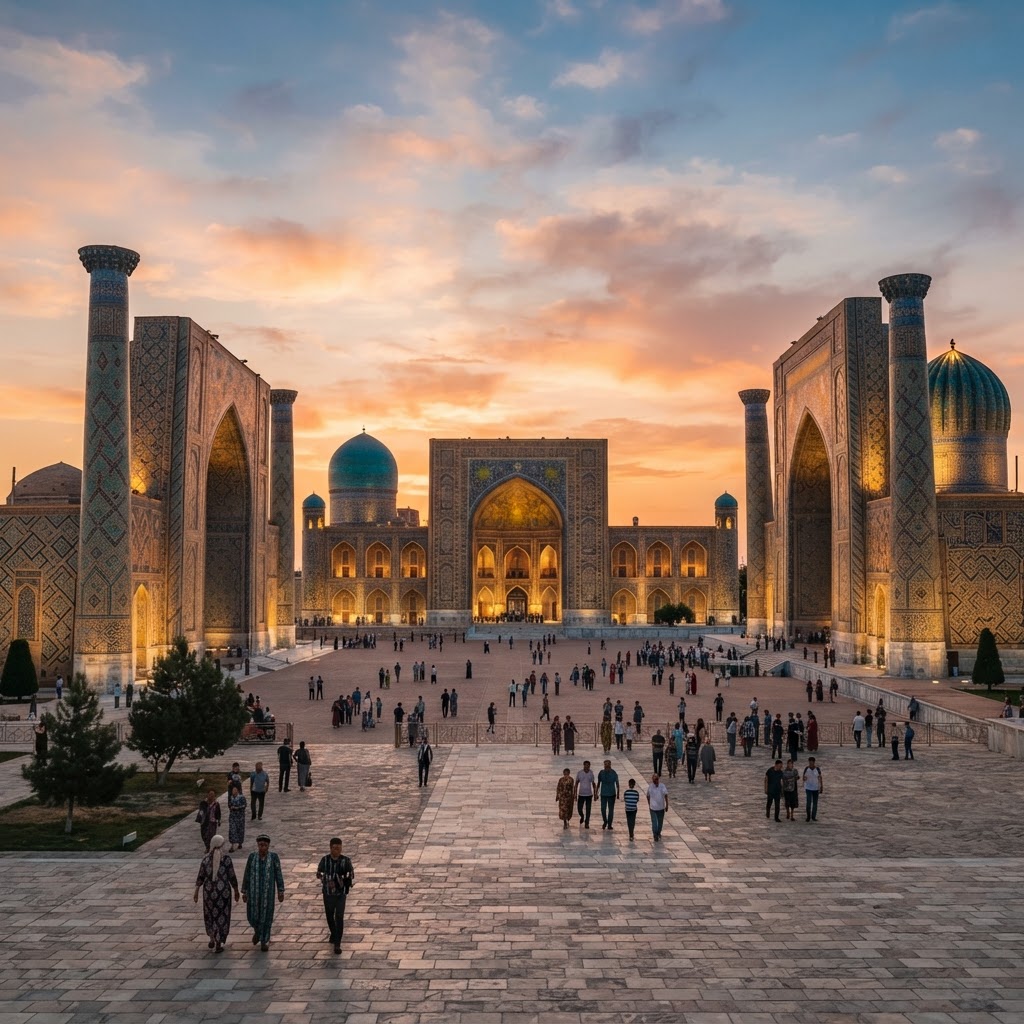
Uzbekistan, with a population of approximately 37.5 million as of August 2026, stands as the most populous nation in Central Asia and occupies a geographically central position that makes it a vital transit hub for regional and transcontinental trade. Despite being doubly landlocked, the country sits at the historic heart of the ancient Silk Road, a geographic reality that continues to shape its strategic ambitions and foreign policy orientation. Since the political transition of 2016, the nation has undergone a profound transformation under President Shavkat Mirziyoyev, opening its economy to foreign investment and pursuing sweeping liberalization across multiple sectors. The government's flagship 'New Uzbekistan' strategy aims ambitiously to double the country's GDP, currently standing at approximately 147 billion US dollars, by the year 2030 through accelerated industrialization and private sector expansion. GDP growth reached 7.7 percent in 2025 and is projected at 6.8 percent for 2026, reflecting a sustained and broadly based economic momentum that has attracted international attention. Life expectancy has reached 73.5 years, a figure that underscores improvements in public health infrastructure and access to medical services over the past decade. The country's literacy rate of 99.9 percent provides a strong human capital foundation upon which its ambitious modernization agenda is being constructed. Infrastructure investment has been particularly pronounced, with large-scale projects in transportation corridors, energy networks, and digital connectivity reshaping the physical and economic landscape. Regional integration has become a foreign policy cornerstone, with Uzbekistan actively strengthening bilateral and multilateral ties with all five Central Asian neighbors to foster a stable and cooperative regional bloc. The government has pursued membership and deeper engagement with international economic organizations to anchor its reform process in globally recognized standards and norms. Urbanization is accelerating, with Tashkent expanding rapidly as both a commercial and administrative hub while secondary cities receive targeted investment to distribute growth more evenly. Demographic pressures, including a relatively young population, create both opportunities in the form of a growing labor force and challenges in terms of job creation and service delivery. Environmental challenges, most notably the continuing ecological aftermath of the Aral Sea crisis and water scarcity issues, present long-term sustainability concerns that the government is beginning to address through regional water diplomacy and domestic conservation programs. The current situation as of mid-2026 is one of rapid modernization characterized by the coexistence of reform momentum and persistent structural challenges that will define the country's trajectory for decades. Uzbekistan's role as a pivotal state in Central Asian geopolitics, combined with its economic dynamism, positions it as one of the most consequential emerging markets in the broader Eurasian space.

