Central Asia — Country Profile
Tajikistan
Population
10.98 million
GDP
$17.7 billion
Literacy Rate
99.8%
Life Expectancy
72.2 years
Net Migration
-2.0
Gender Index
0.504
Economic Indicators
Key Trends (2015–2026)
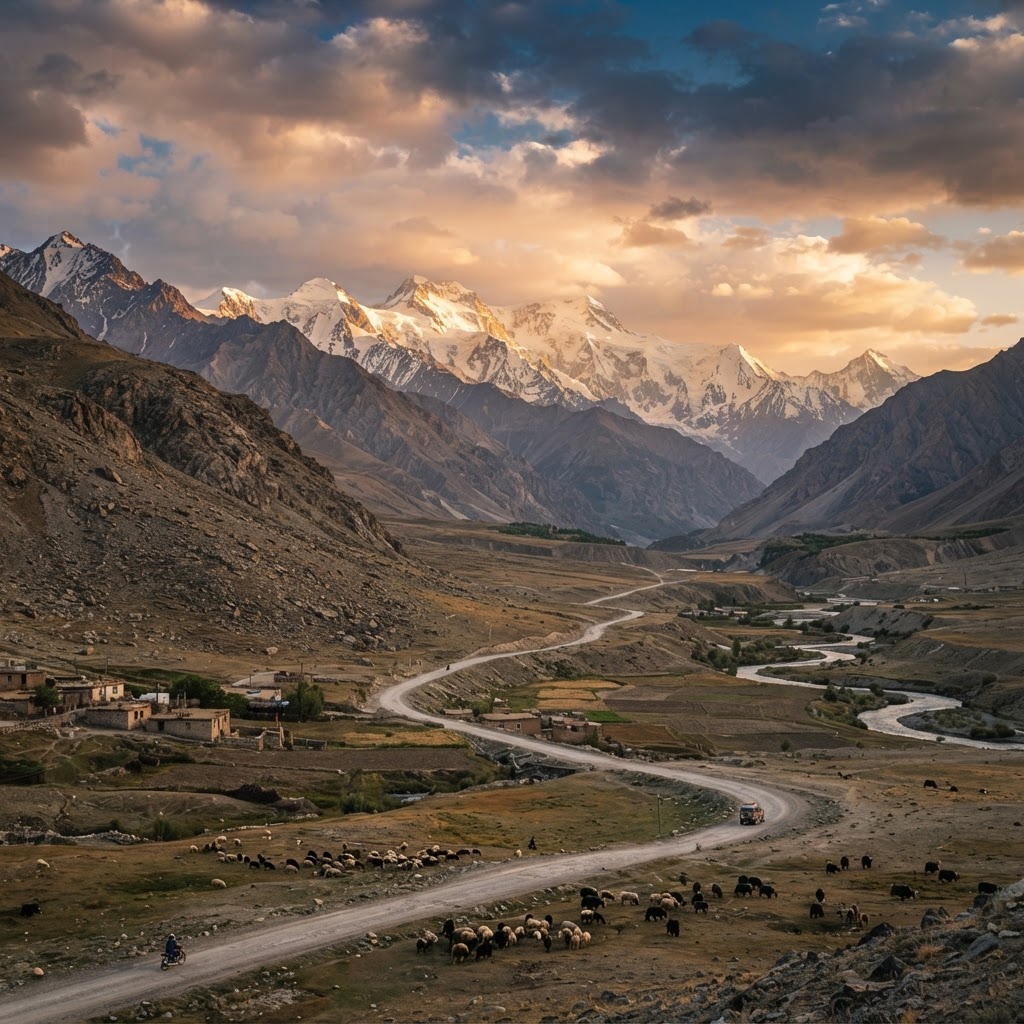
Tajikistan is a landlocked, mountainous nation in Central Asia, strategically positioned between China, Afghanistan, Uzbekistan, and Kyrgyzstan, with a population of approximately 10.98 million as of August 2026. The country's geography is among the most challenging in the region, with over 90 percent of its territory classified as mountainous, severely limiting arable land and complicating infrastructure development, logistics, and domestic market integration. Life expectancy stands at 72.2 years, a figure that reflects modest but steady gains in public health outcomes over the past decade, though it remains below the broader Central Asian average. The Rogun Dam project continues to be the centerpiece of national development ambitions, promising to unlock vast hydropower potential and position Tajikistan as a significant regional energy exporter, fundamentally reshaping its economic trajectory. Despite a projected GDP growth rate of 6.0 percent in 2026, down from the robust 8.4 percent recorded consecutively in 2024 and 2025, the overall economic outlook remains cautiously optimistic given the structural vulnerabilities that persist. The country's GDP stands at approximately 17.7 billion dollars, a figure that underscores the relatively modest scale of the economy relative to its developmental aspirations and strategic location. Tajikistan maintains a delicate and carefully calibrated foreign policy posture, balancing deep institutional ties to Russia through security frameworks with an expanding economic relationship with China, particularly under the Belt and Road Initiative. The proximity to Afghanistan continues to exert significant pressure on national security calculus, influencing both domestic policy and Tajikistan's engagement with multilateral security arrangements. The migration rate of negative 2.0 reflects ongoing demographic pressures, as a substantial share of the working-age population continues to seek economic opportunities abroad rather than remaining in the domestic labor market. The government is presently focused on diversifying energy exports, improving regional connectivity, and attracting foreign investment as complementary strategies for long-term economic stabilization. International partners, including the World Bank, the Asian Development Bank, and the European Union, maintain active development portfolios within the country, supporting governance reforms and infrastructure investment. The nation's literacy rate of 99.8 percent represents a significant inherited strength from the Soviet era and provides a relatively strong human capital foundation upon which broader development efforts can be constructed. Nonetheless, translating this literacy advantage into productive, diversified economic participation remains one of the central governance challenges of the current era. The interplay between geographic isolation, geopolitical complexity, and developmental ambition defines Tajikistan's position as a state navigating multiple simultaneous transitions in the mid-2020s.

