Central Asia — Country Profile
Kazakhstan
Population
20.5 million
GDP
$280 billion
Literacy Rate
99.9%
Life Expectancy
71.5 years
Net Migration
0.5
Gender Index
0.810
Economic Indicators
Key Trends (2015–2026)
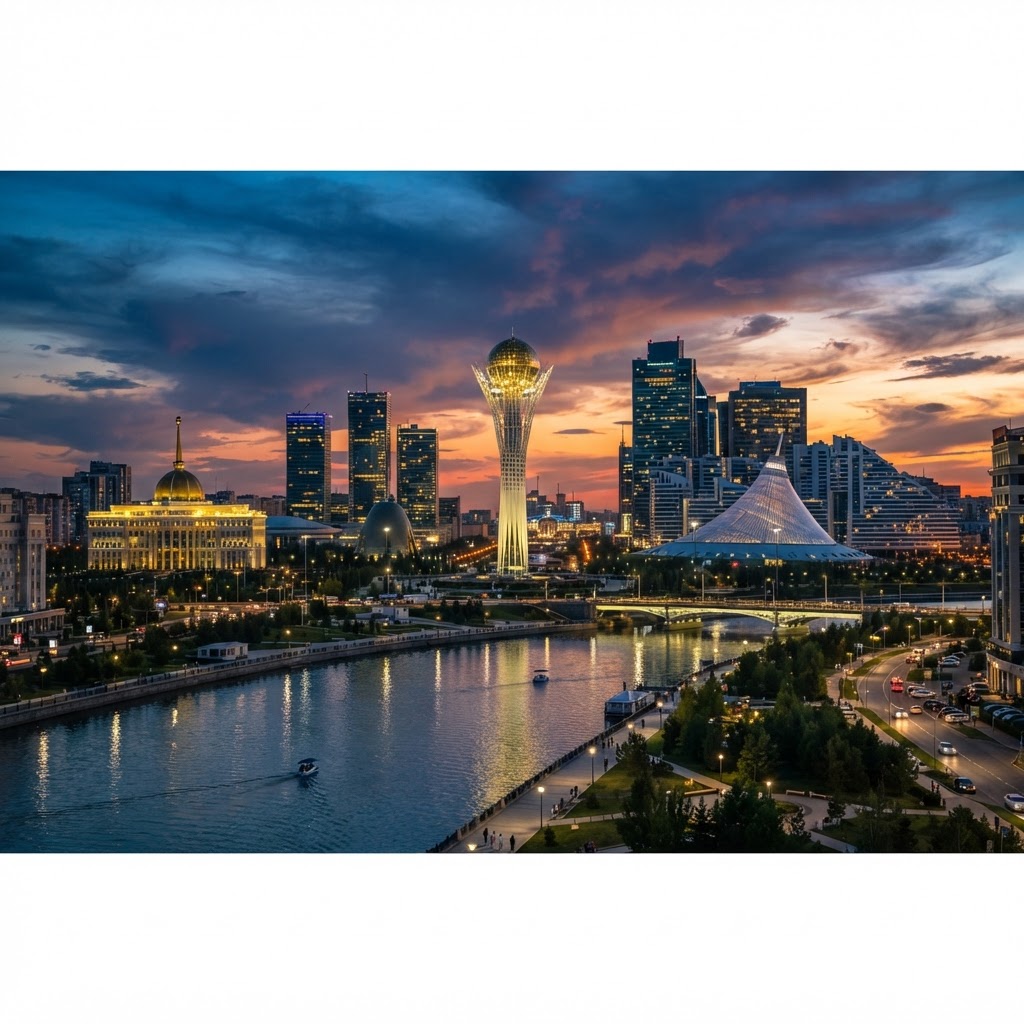
Kazakhstan, with a population of approximately 20.5 million people, stands as the largest economy in Central Asia, underpinned by vast natural resource wealth and a strategically significant geographic position bridging Europe and Asia. As of August 2026, the country is navigating a sustained period of political modernization and economic restructuring, anchored by a GDP that has reached approximately 280 billion US dollars. The nation's GDP growth trajectory has been notably positive, recording 4.2% in 2024, accelerating to 5.9% in 2025, and sustaining a robust 5.5% in 2026, reflecting resilient domestic fundamentals despite global headwinds. Kazakhstan's vast steppe landscapes and extraordinary mineral endowments, including the world's largest reserves of uranium and significant oil and gas deposits, continue to position it as an indispensable actor in global energy and commodity markets. The government's 'New Kazakhstan' agenda, articulated by President Kassym-Jomart Tokayev following the civil unrest of January 2022, has served as the ideological framework for a series of institutional and social reforms intended to broaden civic participation and reinforce the rule of law. A literacy rate of 99.9% provides a strong human capital foundation upon which these modernization ambitions are being constructed, distinguishing Kazakhstan favorably from many of its regional peers. Life expectancy stands at 71.5 years, a figure that reflects both the achievements of the healthcare system and the ongoing challenges related to non-communicable diseases and regional health disparities. The country's Gender Development Index score of 0.810 indicates meaningful but incomplete progress toward equitable human development outcomes across its male and female populations. Kazakhstan's multi-vector foreign policy continues to be a defining characteristic of its international posture, carefully balancing relations with Russia, China, the European Union, and the United States to preserve sovereignty and maximize economic partnerships. The country's membership in the Eurasian Economic Union coexists with its participation in the Conference on Interaction and Confidence Building Measures in Asia and its partnership frameworks with Western institutions, illustrating the deliberate complexity of its diplomatic architecture. Internal demographic dynamics, including urbanization pressures concentrated around Almaty and the capital Astana, are reshaping patterns of labor supply, public service demand, and social mobility. The net migration rate of 0.5 per thousand reflects a broadly neutral migration balance, concealing more nuanced flows of inbound labor migration from Central Asia and outbound skilled emigration toward Russia, Germany, and other destinations. The prevailing analytical assessment as of mid-2026 is one of cautious institutional optimism, with reform momentum sustained but with significant structural, governance, and social challenges yet to be fully resolved. Kazakhstan's trajectory will be closely watched by regional observers as a test case for whether a resource-rich, post-Soviet state can successfully engineer a transition toward more diversified, inclusive, and rules-based governance. The country's scale, resources, and reform ambitions make it one of the most consequential political and economic experiments in the contemporary Eurasian landscape.

