Middle East — Country Profile
Turkey
Population
86.5 million
GDP
1.15 trillion USD
Literacy Rate
97.4%
Life Expectancy
79.2 years
Net Migration
0.8 per 1000
Gender Index
0.760
Economic Indicators
Key Trends (2015–2026)
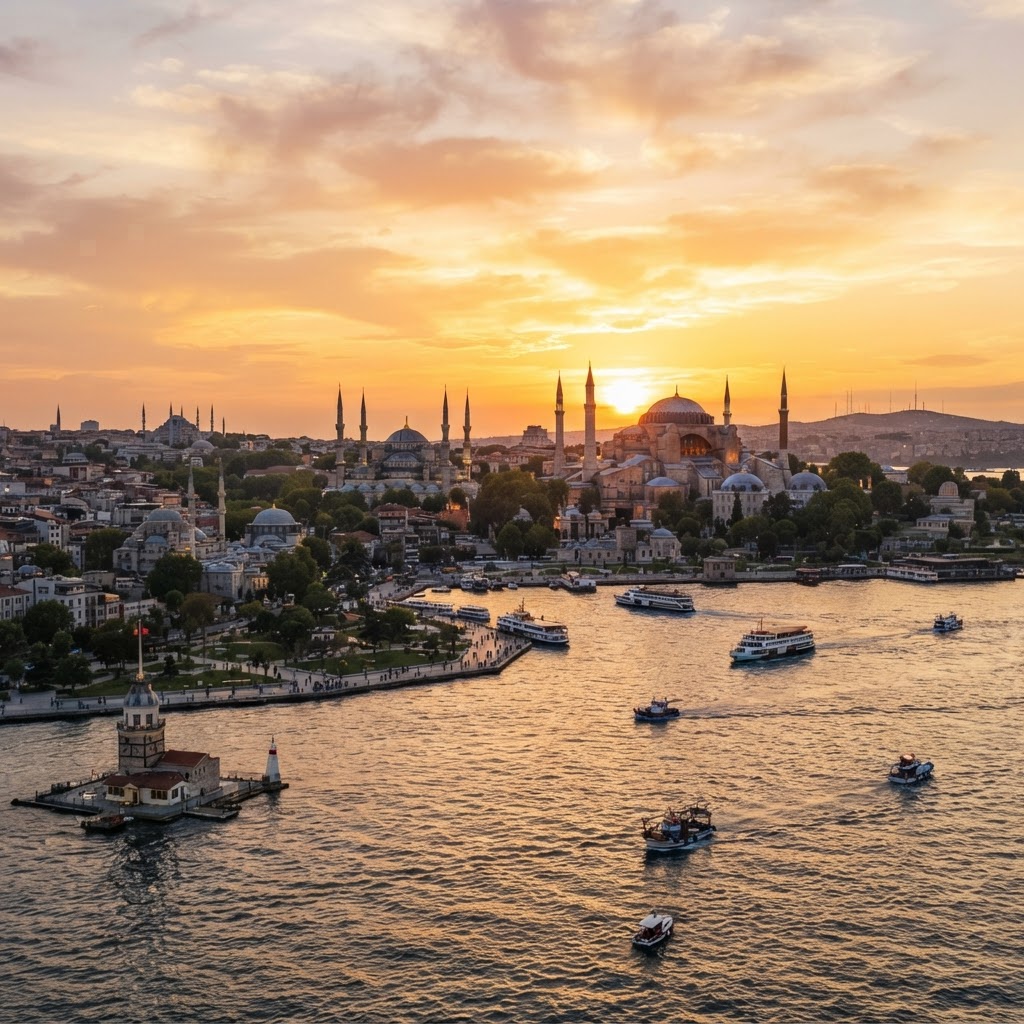
Turkey is a transcontinental nation of 86.5 million people, straddling the boundary between Europe and Asia and occupying one of the most strategically consequential geographic positions in the world. Its territory spans the Anatolian plateau, the mountainous eastern frontier, and extensive Mediterranean, Aegean, and Black Sea coastlines, rendering it a pivotal node for energy transit corridors, intercontinental trade routes, and regional security architectures. As of August 2026, the country is navigating a complex period of economic adjustment, having recorded GDP growth rates of 3.5 percent in 2024, 3.2 percent in 2025, and a modest recovery to 3.4 percent in 2026, reflecting cautious but measured stabilization. With a total GDP of approximately 1.15 trillion USD, Turkey ranks among the twenty largest economies globally and serves as the dominant economic power in its immediate neighborhood. The nation's population of 86.5 million is young and urbanizing rapidly, with major metropolitan centers such as Istanbul, Ankara, and Izmir driving the bulk of economic output and cultural production. Life expectancy stands at 79.2 years, a figure broadly consistent with upper-middle-income countries and indicative of functional healthcare infrastructure despite persistent regional disparities. A literacy rate of 97.4 percent underscores decades of investment in foundational education, though the quality and equity of educational outcomes remain subjects of policy debate. Turkey's geopolitical role has expanded considerably in the 2020s, with the country asserting influence across the Middle East, North Africa, the South Caucasus, Central Asia, and the Western Balkans simultaneously. Its membership in NATO, combined with its independent diplomatic posture and extensive defense industry development, positions Ankara as an actor that cannot be easily categorized within conventional alignment frameworks. Tourism continues to represent a significant pillar of the economy, with Turkey consistently ranking among the world's top ten most visited countries, generating substantial foreign exchange earnings that partially offset structural current account pressures. The country is also a major manufacturing hub, with automotive, textile, chemicals, and electronics sectors contributing substantially to export revenues and employment. The gender inequality index of 0.760 signals that while institutional frameworks for gender equity exist, meaningful gaps persist across political participation, labor force engagement, and social protection domains. Turkey's net migration rate of 0.8 per 1,000 persons reflects a complex demographic picture in which refugee hosting, labor emigration to Europe, and return migration interact to produce a nuanced population dynamic. In the context of a rapidly shifting regional order shaped by the ongoing aftermath of conflicts in Syria, Ukraine, and the broader Middle East, Turkey's strategic relevance to global powers ensures that its domestic evolution carries implications well beyond its borders. The overarching trajectory as of mid-2026 is one of cautious institutional consolidation, economic recalibration, and sustained ambition to project influence as an autonomous regional power.

