South Asia — Country Profile
Bangladesh
Population
175 million
GDP
480 billion USD
Literacy Rate
76%
Life Expectancy
74 years
Net Migration
-0.5 per 1000
Gender Index
0.520
Economic Indicators
Key Trends (2015–2026)
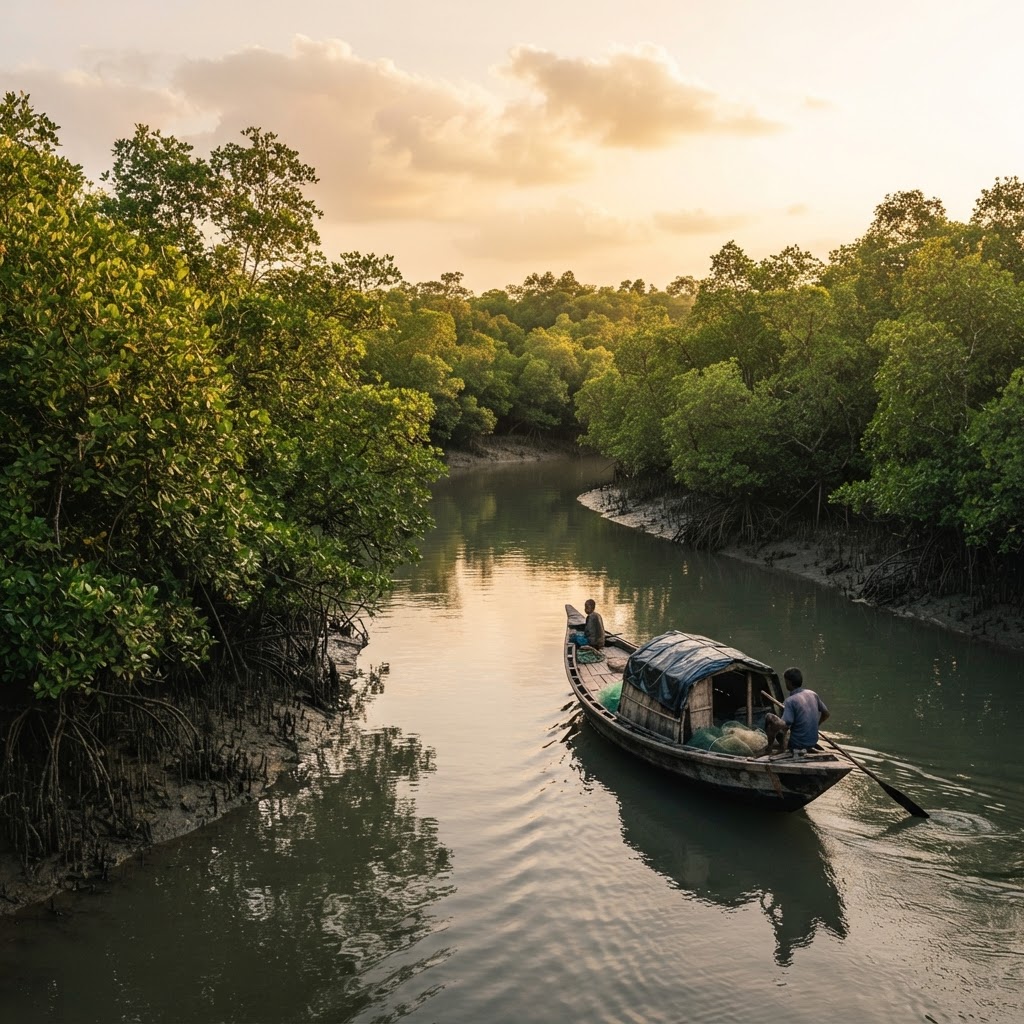
Bangladesh, a nation of approximately 175 million people situated at the confluence of the Ganges and Brahmaputra river deltas in South Asia, stands as one of the most compelling development stories of the twenty-first century. As of August 2026, the country is navigating a complex transition from a low-income economy toward middle-income status, buoyed by a GDP that has reached approximately 480 billion USD. The economy has demonstrated remarkable resilience, registering GDP growth rates of 5.8 percent in 2024, 6.0 percent in 2025, and a projected 6.2 percent in 2026, placing Bangladesh among the faster-growing economies in the Asian region. Life expectancy has risen to 74 years, a figure that reflects substantial improvements in public health infrastructure, maternal care, and disease prevention over the past two decades. The national literacy rate stands at 76 percent, indicating meaningful educational progress, though significant gaps remain between urban and rural populations. The country's young and expanding population represents both an economic opportunity and a structural challenge, requiring sustained investment in human capital and employment generation. Bangladesh's geographic position, while conferring agricultural productivity through its fertile deltaic plains, simultaneously exposes it to heightened vulnerability from cyclones, flooding, and the long-term consequences of climate change including sea-level rise. Infrastructure development has accelerated markedly, with landmark projects such as the Padma Bridge enhancing internal connectivity and enabling broader economic participation across previously isolated regions. The government's 'Vision 2041' development framework continues to serve as the guiding policy architecture for national transformation, aiming to achieve developed-nation status within the next fifteen years. Industrial diversification beyond the garment sector into information technology, pharmaceuticals, and light engineering is increasingly central to the national growth strategy. The net migration rate of negative 0.5 per 1,000 persons reflects a pattern of outward labor migration that, while reducing domestic unemployment pressure, also signals persistent gaps in domestic wage levels and employment quality. Bangladesh's gender development index score of 0.520 illustrates the uneven nature of social progress, with advances in female education and health offset by persistent inequalities in economic participation and political representation. The country's international standing has grown considerably, reflected in its active engagement with multilateral institutions and its recognized leadership on climate adaptation policy. Geopolitically, Bangladesh occupies a strategically significant position between India and Myanmar, lending it relevance in broader South and Southeast Asian regional dynamics. Sustained macroeconomic management, governance reform, and climate resilience investment will collectively determine whether Bangladesh successfully consolidates its development gains in the decade ahead.

