East Asia — Country Profile
South Korea
Population
51.7 million
GDP
1.8 trillion USD
Literacy Rate
98.0%
Life Expectancy
83.6 years
Net Migration
0.2 per 1000
Gender Index
0.890
Economic Indicators
Key Trends (2015–2026)
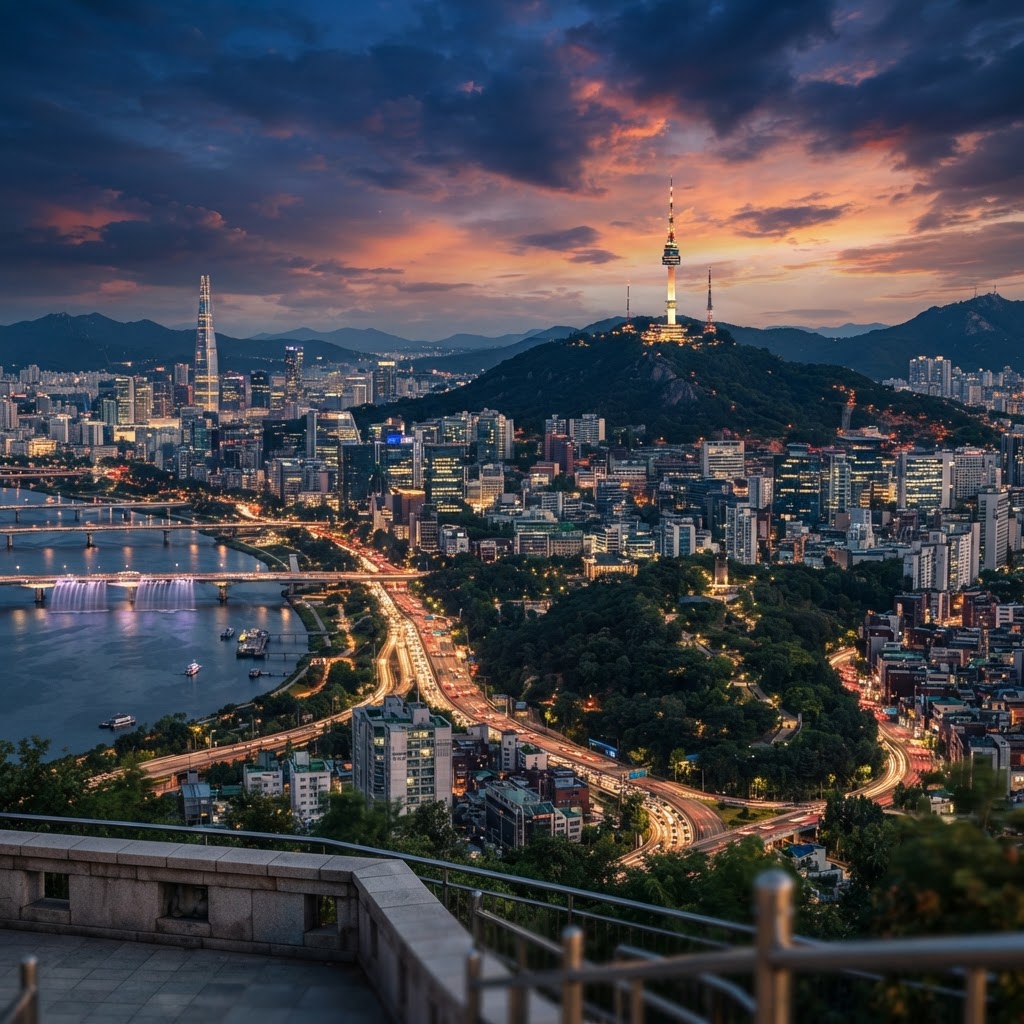
South Korea, a highly industrialized nation of approximately 51.7 million people situated on the Korean Peninsula in East Asia, stands as one of the most remarkable development success stories of the twentieth century and continues to redefine its global role in the twenty-first. As of August 2026, the country is experiencing a profound and historically significant economic surge, with GDP growth reaching an extraordinary 7.5 percent, a figure that has substantially surpassed the projections of most international financial institutions and independent analysts. This acceleration builds upon a trajectory of steady recovery, with GDP growth recorded at 2.5 percent in 2024 and climbing to 3.5 percent in 2025, before the exponential leap driven by semiconductor and AI-hardware export demand materialized in 2026. South Korea's life expectancy of 83.6 years reflects decades of investment in healthcare infrastructure and public health policy, placing the nation consistently among the world's healthiest populations. A literacy rate of 98.0 percent underpins the country's highly educated and productive workforce, which serves as the foundation for its technology-intensive economic model. Geographically, the Korean Peninsula's strategic location in Northeast Asia makes South Korea a linchpin for regional trade, security dynamics, and diplomatic networks that extend from Washington to Beijing to Tokyo. Despite its economic successes, South Korea confronts one of the most severe demographic crises in the world, with fertility rates falling to historic lows that threaten long-term population sustainability and labor market stability. The migration rate of just 0.2 per 1,000 people illustrates the relatively limited inflow of foreign nationals relative to the scale of the demographic challenge, though government policy is actively working to expand this figure. The government's industrial strategy, centered on maintaining leadership in semiconductors, artificial intelligence hardware, electric vehicle components, and biotechnology, reflects a deliberate effort to secure long-term competitive advantages in sectors expected to define the global economy through the mid-twenty-first century. Inflation, which stood at 3.0 percent in 2024, has moderated progressively to 2.8 percent in 2025 and further to 2.5 percent in 2026, signaling a stabilizing macroeconomic environment that supports both consumption and investment. South Korea's total GDP of approximately 1.8 trillion USD places it among the world's fifteen largest economies, and the 2026 growth rate has meaningfully expanded its nominal economic output relative to recent years. The country's Gender Development Index score of 0.890 reflects significant achievements in reducing gender disparities across health, education, and economic participation, though notable structural inequalities persist in labor market outcomes. South Korea continues to pursue a careful geopolitical balancing act, maintaining its treaty alliance with the United States while managing complex and often tense relationships with North Korea, China, and Japan. The country's social fabric is simultaneously marked by deep cultural cohesion, intense competitive pressures in education and labor markets, and a rapidly evolving discourse around demographic policy, immigration, and gender equality. As of August 2026, South Korea represents a nation at an inflection point, capitalizing on a moment of exceptional economic momentum while grappling with structural challenges that will define its trajectory over the coming decades.

