Africa — Country Profile
Somalia
Population
18.7 million
GDP
$14.17 billion
Literacy Rate
41.5%
Life Expectancy
57.2 years
Net Migration
-6.4 per 1,000
Gender Index
0.582
Economic Indicators
Key Trends (2015–2026)
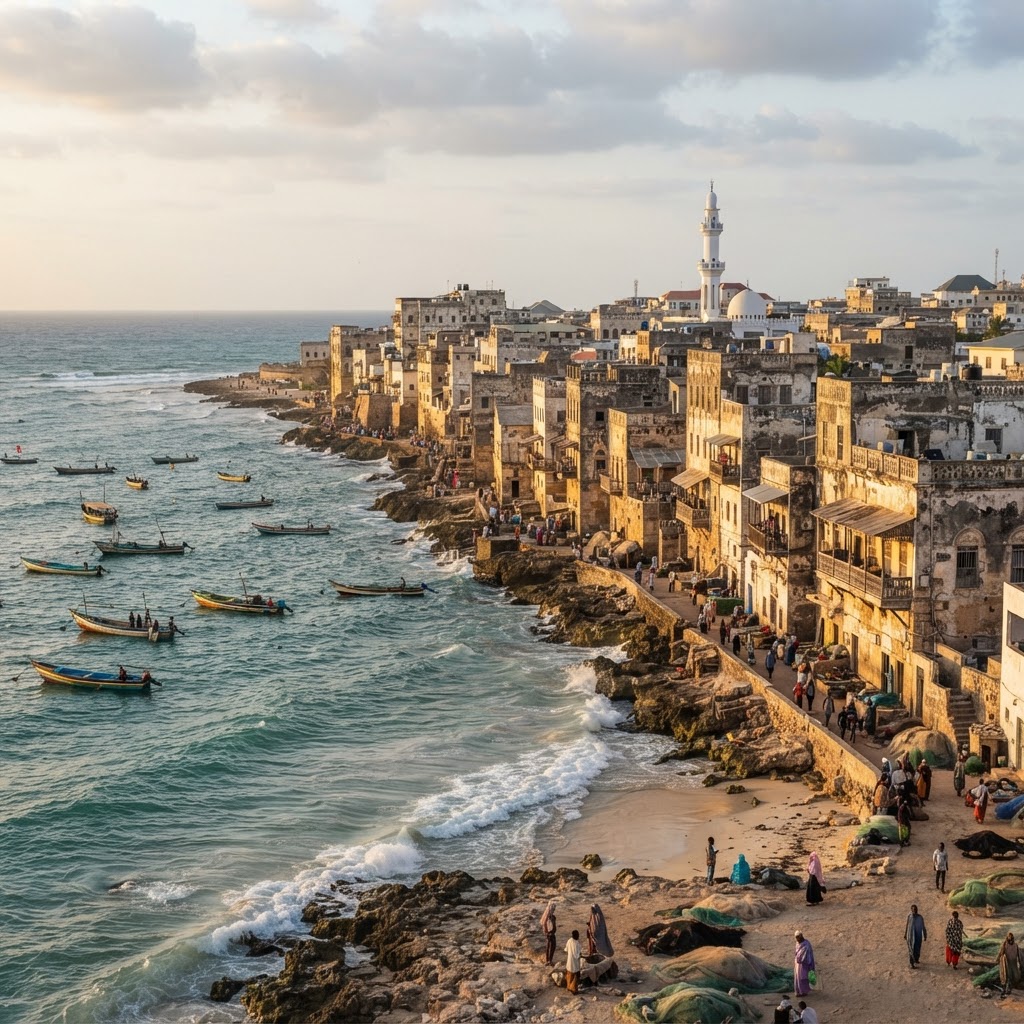
Somalia in August 2026 is navigating a pivotal transition period characterized by significant security gains and the gradual consolidation of federal institutions, representing one of the most complex state-building experiments in contemporary geopolitics. With a population of 18.7 million people and a GDP of approximately 14.17 billion dollars, the country is emerging from decades of conflict and humanitarian crisis with a cautious but measurable sense of forward momentum. Following the successful completion of the HIPC debt relief process, Somalia has regained meaningful access to international financial markets, enabling a structural shift from emergency humanitarian aid toward long-term development programming. The geography of Somalia, possessing the longest coastline in mainland Africa at approximately 3,333 kilometers, remains its greatest untapped strategic asset, particularly for blue economy initiatives including fisheries management and maritime trade. However, the nation continues to face the dual and intersecting challenges of a persistent insurgency by Al-Shabaab and the recurring, devastating impacts of climate change, including droughts and catastrophic flooding that have displaced millions. The political landscape in 2026 is defined by the ongoing constitutional review process and the critical transition from the African Union Transition Mission in Somalia, known as ATMIS, to a new security arrangement designated AUSSOM, which places increasing responsibility on national institutions. Real GDP growth is projected to reach 4.2 percent in 2026, reflecting an accelerating recovery trajectory compared to 3.1 percent in 2024 and 3.8 percent in 2025, signaling growing confidence from both domestic actors and international partners. Life expectancy stands at a troublingly low 57.2 years, a stark indicator of the cumulative toll that conflict, disease burden, and nutritional insecurity have imposed on the population over successive generations. The literacy rate of 41.5 percent further underscores the depth of the human capital deficit that must be addressed if Somalia is to sustain its current growth trajectory over the medium and long term. The strategic focus for 2026 is on stabilizing liberated areas, enhancing the operational capacity of the Somali National Army, and delivering tangible governance dividends in territories recovered from insurgent control to prevent their recapture. International partners including the United Nations, the World Bank, the African Union, and bilateral donors remain deeply engaged in supporting the country's gradual path toward a functioning One Person, One Vote electoral system. The resilience of the Somali people and the dynamism of the private sector, particularly in telecommunications and mobile financial services, continue to provide a foundation upon which institutional recovery can be built. Somalia's gender inequality index of 0.582 reflects deep structural disparities that cut across economic, political, and social dimensions, representing a significant constraint on the country's overall development potential. The year 2026 is thus best understood as a moment of fragile but genuine opportunity, in which the convergence of debt relief, incremental security gains, and renewed institutional reform efforts creates conditions that, if sustained, could alter Somalia's long-term trajectory.

