Middle East — Country Profile
Syria
Population
24.7 million
GDP
25 billion USD
Literacy Rate
86%
Life Expectancy
72.1 years
Net Migration
-12.5 per 1000
Gender Index
0.490
Economic Indicators
Key Trends (2015–2026)
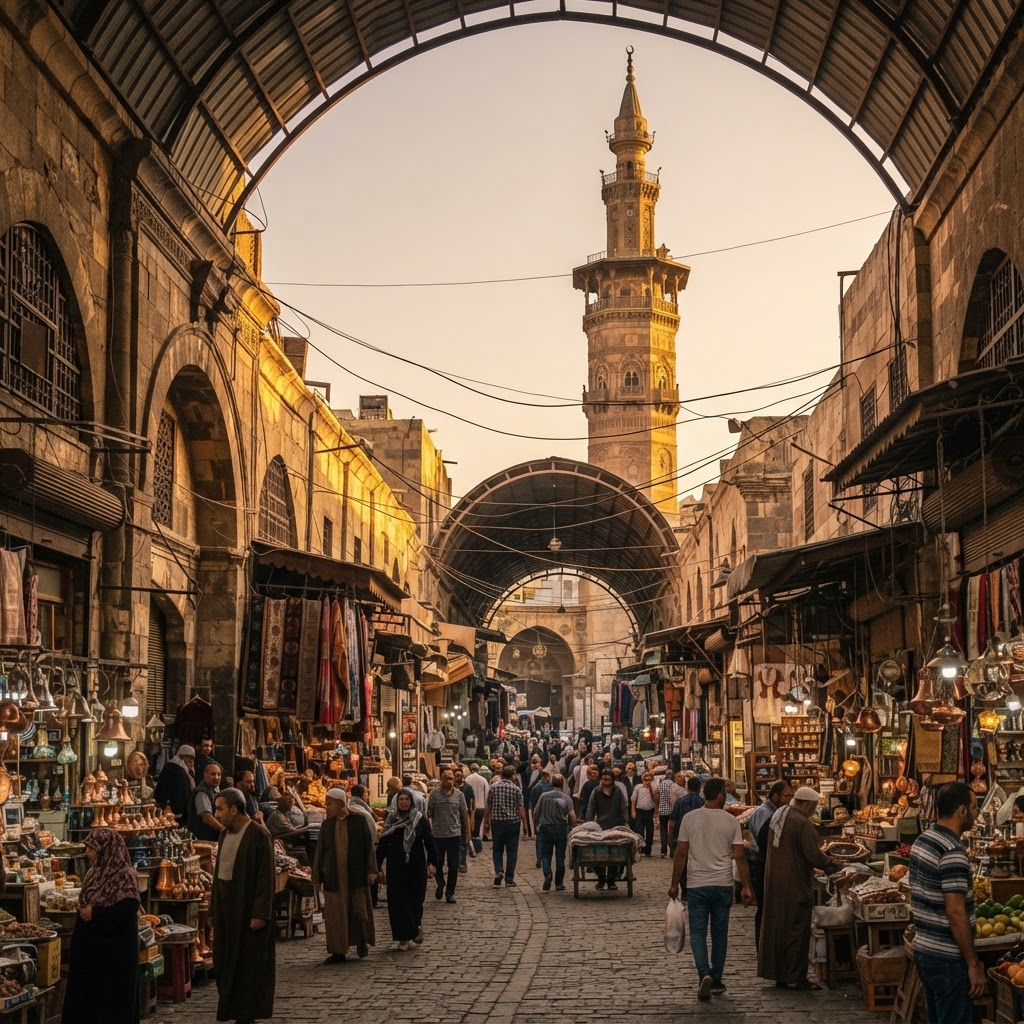
Syria remains in a state of fragile yet increasingly tangible transition as of August 2026, following the seismic political shifts that reshaped the country's governance structure in late 2024. With a population of approximately 24.7 million people, the country is attempting to reconstitute its social and institutional fabric after more than a decade of devastating civil conflict. The country's diverse geography, spanning from the fertile Mediterranean coastal strip through the Orontes Valley to the arid expanses of the Euphrates basin, continues to shape both the pace and character of regional recovery efforts. Major urban centers including Damascus and Aleppo have experienced a meaningful cessation of large-scale combat operations, allowing for the gradual resumption of civilian economic activity. Life expectancy, which stands at 72.1 years, reflects the long-term human cost of conflict but also signals underlying demographic resilience that will be critical to reconstruction. The socio-economic landscape, however, remains deeply scarred by years of infrastructure destruction, capital flight, and institutional decay. International support from bodies such as the United Nations, the World Bank, and bilateral donors remains indispensable for basic service delivery including water, electricity, and medical care. Syria's literacy rate of 86 percent, while relatively high for the region given the disruptions of war, underscores the latent human capital potential that reconstruction planners are seeking to harness. The government formed in the aftermath of the 2024 transition is currently focused on consolidating administrative control across contested provinces while simultaneously managing one of the most complex voluntary return operations in recent history. The migration rate of negative 12.5 per 1,000 people reflects the ongoing net outflow of population, though this figure has improved modestly compared to the worst years of the conflict. Regional powers including Turkey, Saudi Arabia, the United Arab Emirates, and Iran continue to exert significant influence over the pace and direction of Syria's stabilization. A cautious but discernible sense of normalization has taken hold in select urban neighborhoods, where markets have reopened and small businesses have resumed operations. Nevertheless, structural vulnerabilities in governance, economic management, and social cohesion remain formidable obstacles to sustainable peace. The international community's engagement in 2026 is increasingly calibrated toward long-term development programming rather than purely humanitarian relief, signaling a collective assessment that Syria has crossed a critical threshold of stabilization. The path ahead remains uncertain, but the convergence of political transition, incremental economic recovery, and renewed diplomatic engagement offers a cautiously optimistic baseline for the country's medium-term trajectory.

